

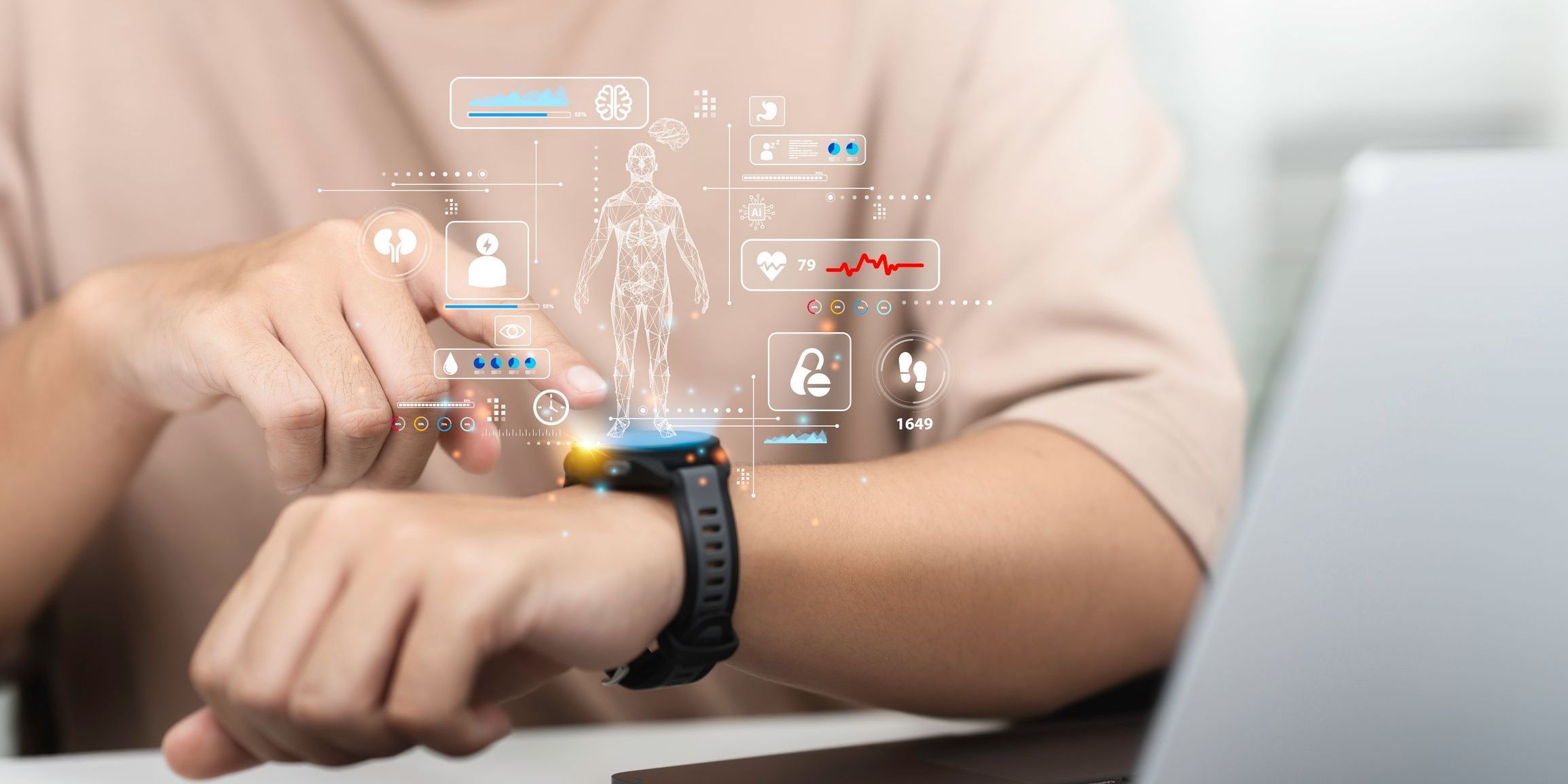
Knowing what to pay attention to on your fitness watch can feel overwhelming. With so many metrics available, it is not always clear how to interpret what your watch is telling you.
Long before you feel exhausted, stressed, sick, or overtrained, wearable devices can often detect subtle changes in your body through metrics like heart rate variability, sleep quality, recover, and resting heart rate.
When used intentionally, your fitness watch can become one of the most effective tools for understanding your body, recognizing habits, and supporting your long-term health.
As a health coach at PartnerMD, I work with members to identify their personal health goals, understand what their fitness watch metrics mean, and how using one can support improvements in energy, stress, and daily routines.
Interested in learning how your fitness watch can help you make meaningful changes to your lifestyle? We've got you covered with the features and metrics that truly matter.
Key Takeaways
- Fitness watches can help you better understand your sleep, recovery, stress, and overall health habits.
- Step count remains one of the simplest and most valuable metrics your watch can provide to build consistent daily movement.
- Various wearable devices are designed for different goals, including fitness tracking, recovery, sleep, and athletic performance.
- Fitness watches are available across a wide range of price points, making wearable devices accessible for different lifestyles and budgets.
Let's dive into the top fitness watch features and how they can help you better understand your health and wellness.
Step Count
Step count is one of the simplest and most useful metrics. This feature tracks your daily movement, exercise, and activity. While many people aim for 10,000 steps per day, around 7,000 steps is enough to deliver significant health benefits and even lower the risk of cardiovascular disease.
The real value comes from understanding your personal baseline and what makes sense in your lifestyle.
As a guide, 10 minutes of movement is about 1,000 steps, and one mile is roughly 2,000 steps. This can help you pace your day, stay consistent, and increase or decrease your activity if desired.
Calories Burned
A common misconception is that the calories you burn during exercise are the same as the ones you consume.
The truth? There are two types of calories burned: active and total.
Active calories are burned from exercise or movement, while total calories tie into your body's baseline metabolic rate (BMR), which is the energy your body uses to perform essential functions at rest. While these metrics are different, understanding how each works can help you better interpret your fitness data.
Think of it this way:
Total calories = baseline (BMR) + activity (active calories)
/iStock-2231079370.jpg?width=2121&height=1414&name=iStock-2231079370.jpg)
Heart Rate
Your watch updates you on your resting heart rate and heart rate zones, including light activity in Zone 1 through peak cardio in Zone 5.
Understanding the five tiers of heart rate zones can help you gauge your effort during exercise. Each zone represents a different level of intensity:
- Zone 1 – Low Intensity
- Light effort, ideal for warming up, cooling down, or gentle activity.
- Zone 2 – Basic Endurance
- Slightly elevated heart rate, ideal for building endurance and improving cardiovascular fitness.
- Zone 3 – Moderate Intensity
- Moderate to high effort, commonly used to improve stamina and overall fitness.
- Zone 4 – High Intensity
- Challenging effort, including activities like High-Intensity Interval Training (HIIT) or fast-paced cycling. Typically shorter in duration.
- Zone 5 – Maximum Effort
- Maximum intensity that can only be sustained briefly. Requires caution and proper recovery to avoid injury.
Fitness watches will not replace your doctor, but they can give you something just as important in the moment: an early warning sign you might miss.
When monitoring heart rate, your watch can alert you if it becomes unusually low or high. Wearing a watch may help detect irregular heart rhythms and prompt earlier medical attention.
Heart Rate Variability
While your heart rate tells you how fast your heart is beating, Heart Rate Variability (HRV) measures the subtle variations between heartbeats. This can change throughout different circumstances, such as during stress or when your immune system is fighting a cold.
Variations are controlled by your autonomic nervous system, which regulates in two key states:
- Sympathetic – Your body is in fight or flight mode. This is often during stress, exercise, or illness.
- Parasympathetic – Your body is in rest and recovery. This is when you are relaxed and recovering.
The higher the level of HRV, the more responsive and adaptable your body is, suggesting strong recovery and overall resilience. On the other hand, a lower level of HRV can indicate physical or mental stress, poor sleep, and illness or fatigue.
For example, if your HRV suddenly drops after several nights of poor sleep or intense workouts, your body may be signaling that it needs recovery before you feel physically exhausted.
Stress Score
Your stress score is a combination of the following factors:
- Heart Rate Variability (HRV) – The primary driver of your stress score. A higher HRV indicates your body is in a more relaxed and recovered state, while a lower HRV means higher stress, fatigue, or physical strain.
- Resting and Real-Time Heart Rate – Your heart patterns throughout the day. Daily factors such as stress, exercise, hydration, and sleep can cause your rate to rise or fall. Comparing these patterns to your normal baseline can help identify when something feels off.
- Movement and Activity – Motion sensors used by fitness watches to determine whether an elevated heart rate is caused by physical activity, such as walking or exercise, or by non-activity-related stress.
Most people do not realize the impact of stress on their body until it impacts their sleep, mood, and overall health. Your stress score offers a real-time reflection of how your body is responding, allowing you to act sooner.
This awareness allows you to better understand what is actually affecting your body. If your stress score is elevated, it can be a signal to pause and reset through deep breathing or taking a walk.
If your stress levels are lower, it may be a sign that your body is ready for more intense activity.
Sleep Duration
Fitness watches track not only how long you sleep, but how well you sleep. By using sensors and data patterns, they track your movement and change in heart rate to determine your total sleep time and sleep score.
/iStock-2188503512.jpg?width=4096&height=2160&name=iStock-2188503512.jpg)
More than one-third of U.S. adults do not get the recommended amount of sleep each night, making sleep tracking one of the most valuable features offered by wearable devices.
Most watches monitor your sleep by scoring it out of 100 and can detect if you are going through light or deep sleep. Paying close attention to this allows you to take steps to improve your sleeping patterns over time.
Watches detect the following sleep stages:
- Light Sleep – A transitional stage of sleep where your body begins to relax and it is easier to wake up.
- Deep Sleep – The stage of sleep focused on physical recovery, restoration, and muscle repair.
- REM Sleep – The stage associated with mental recovery, memory processing, learning, and dreaming.
VO2 Max
Your VO2 max is a measure of cardiovascular fitness, and in a clinical setting is measured by using specialized equipment to track how much oxygen is inhaled and exhaled during intense exercise.
Fitness watches cannot measure oxygen consumption, but they do have a special way of estimating it.
A variety of factors are included when calculating your VO2 max, including:
- Your heart rate response to exercise, speed, pace, and distance.
- Personal information such as your age, gender, and weight.
The more work your heart can handle at higher intensities without needing to beat as fast, the stronger your cardiovascular fitness typically is.
Did you know your watch doesn't rely on one single workout to create its data? It builds your VO2 max estimate over time and monitors your daily sessions by creating an estimate based on consistent activity.
Although VO2 max laboratory tests remain the highest standard, your watch can provide a reasonably accurate estimate, although it is not perfect.
When comparing VO2 max estimates on wearable devices, it was found that they had the average error range of 5 to 15 percent depending on the brand, user fitness level, and workout conditions.
What Fitness Watches Cannot Do
While fitness watches provide valuable health insights, there are a few factors to keep in mind when interpreting data, including:
- Fitness watches support health awareness, but they are not medical devices and should not replace professional medical advice, evaluations, or diagnostic testing.
- Calorie estimates are not always perfect. Most watches calculate calories burned by using factors such as heart rate, age, weight, activity level, and movement patterns. These estimates may vary based on factors such as heart rate, activity, body composition, and device accuracy.
- Sleep tracking differs between brands and models. Once device may interpret your sleep differently than another. They are helpful for identifying trends, not to diagnose sleep quality or disorders.
/iStock-2238113012.jpg?width=2121&height=1414&name=iStock-2238113012.jpg)
Fitness Watch Features
There are a variety of fitness watch brands and models on the market. Depending on your goals, most fall into the categories of fitness trackers, smartwatches, GPS and multisport watches, smart rings, and hybrid watches.
While every device is different, many models offer features such as text and call notifications, weather alerts, music controls, GPS navigation, app connectivity, and more.
Which Watch Is Right for Me?
Interested in learning which watch or device style may be best for your goals? Explore a few of the popular brands below:
- Amazfit – Beginner-friendly for simple fitness and activity tracking.
- Apple Watch – Best for smartwatch functionality alongside fitness and wellness tracking.
- Garmin – Ideal for serious endurance training and advanced performance tracking.
- Oura – Designed for sleep and wellness tracking with 50+ additional health metrics.
- Whoop – Focused on recovery and strain tracking with advanced health and longevity insights through a monthly subscription.
Turn Your Data Into Better Health
Fitness watches do not replace healthy habits, but they can help you understand the patterns that shape your overall health.
The most valuable part of wearable technology is not the data itself, but what you choose to do with it. Small changes like improving sleep, moving more consistently, and recognizing when your body needs recovery can make a meaningful difference over time.
At PartnerMD, we believe preventive health starts with understanding your body before problems arise. Insights for your sleep, recovery, stress, and daily habits can lead to meaningful long-term health improvements.
Want more practical wellness tips and preventive health insights? Follow PartnerMD on social media to stay connected with our latest resources.
/Copy%20of%20Socials%20CTA%20(771%20x%20111%20px).png?width=771&height=111&name=Copy%20of%20Socials%20CTA%20(771%20x%20111%20px).png)
