


Has summer travel or changes in your routine left you feeling bloated or a little off? Have you come back from vacation feeling sluggish or unable to get back into your usual eating habits?
Maybe you've been drinking less water, eating fewer fiber-rich foods, enjoying more sugary drinks or processed foods, or simply eating differently than you normally would. Those changes can significantly affect your gut health.
According to a study from the National Library of Medicine, just one week of travel was associated with more than 1.5 times greater fluctuations in the gut microbiome compared with not traveling.
Gut health is a topic that comes up regularly in my work with PartnerMD members, especially after travel or changes in routine. As a health coach, I focus on helping members build practical, sustainable habits that support digestive health for the long term.
So, how can you support your gut health and get your routine back on track? In this article, you'll learn:
- Why hydration is important and which healthy beverages to consider, including kombucha and black or green tea.
- What prebiotics and probiotics are, and how they support your gut microbiome.
- The role of retrogradation in supporting a healthy intestinal environment.
- How diet irritants can contribute to gut dysbiosis.
- The connection between exercise and gut health, including digestion and metabolism.
Why Is Hydration So Important for Gut Health?
Hydration is one of the simplest and most important ways to support your gut health. It helps with digestion, keeps things moving, and supports a healthy environment for the bacteria in your gut.
Travel and changes to your routine can affect how much fluid you get and how sluggish or hungry you may feel. This is why paying close attention to hydration is especially important.
Water helps break down food and works with fiber to support regular digestion. Without enough fluid, digestion can slow down, potentially leading to discomfort.
A general rule of thumb is to aim for eight glasses of water a day, which is equivalent to 64 fluid ounces. However, individual hydration needs vary based on factors such as body size, composition, and activity level.
What Are Some Healthy Beverage Options?
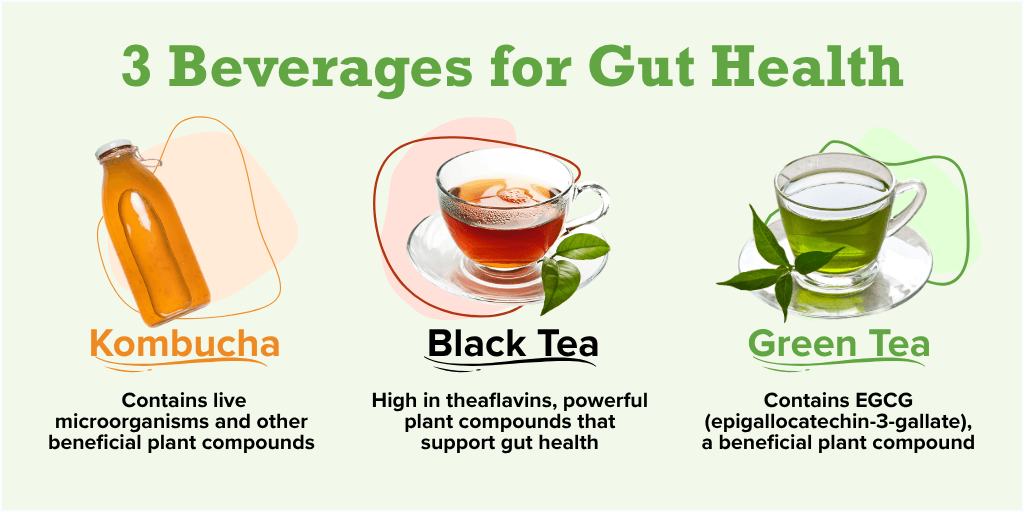
When it comes to staying hydrated, you don't have to only stick to water. Healthier options such as kombucha and black or green tea can provide additional benefits while keeping you replenished.
Kombucha
Kombucha is a fermented tea that contains live microorganisms and other beneficial plant compounds. It may help support gut health and digestion and also contains antioxidants that help protect your cells from damage.
While research is ongoing, kombucha is being studied for additional benefits related to inflammation, blood sugar, and metabolic health. There are many brands and flavors, and some contain questionable additives, so be sure to check the ingredient list and nutrition facts.
Green and Black Tea
Green and black tea both come from the Camellia sinensis plant. They contain natural nutrients and antioxidants that may support heart, brain, and immune health.
Both are rich in polyphenols, naturally occurring plant compounds found in:
- Vegetables and fruits
- Tea and coffee
- Herbs and spices
- Nuts
- Other plant-based foods
While these specific types of teas contain L-theanine, an amino acid known for its calming effects, they also have some key differences:
- Green Tea – Contains about 29 milligrams of caffeine per 8-ounce cup and is rich in the antioxidant epigallocatechin-3-gallate (EGCG). EGCG may help reduce inflammation and support heart health.
- Black Tea – Contains about 48 milligrams of caffeine per 8-ounce cup and gets many of its antioxidant properties from theaflavins, a unique group of polyphenols that may support healthy cholesterol levels and overall heart health.
If tea is something you're interested in, opt for an unsweetened variety. While many teas seem like a healthy choice, sweetened versions can contain a surprising amount of added sugar.
Prebiotics and Probiotics: How Are They Different?
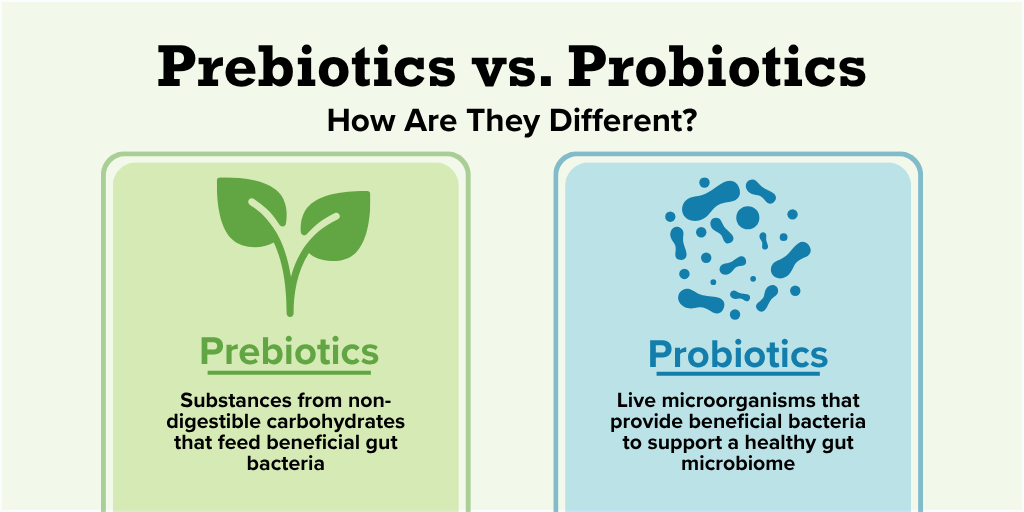
With so many food and beverage items in the grocery store labeled as prebiotics and probiotics, you might be curious about how they differ. Both can play an important role in supporting a healthy gut microbiome.
Prebiotics: Substances That Feed Microorganisms
Prebiotics are specific substances, including dietary fiber or other nondigestible carbohydrates, that are selectively used by beneficial microorganisms in the body.
They serve as fuel for certain beneficial microbes already living in your gut. Since your body isn't able to fully digest them, they reach the colon, where gut bacteria can ferment them and produce short-chain fatty acids.
Examples of prebiotic foods include:
- Garlic
- Onions
- Asparagus
- Bananas
- Oats
- Barley
- Beans and lentils
Some fiber-rich plant foods can also contain prebiotics. However, it's important to remember that not all dietary fiber is a prebiotic.
Probiotics: Live Microorganisms
Probiotics are live microorganisms, including certain bacteria and yeasts, that provide health benefits when consumed in adequate amounts. They occur naturally in some fermented foods and can help support the community of microorganisms in your gut microbiome.
Foods that contain probiotics or live cultures include:
- Yogurt with live and active cultures
- Kefir
- Kimchi
- Sauerkraut
- Some fermented beverages, such as kombucha
What Is Retrogradation?
A surprisingly useful trick that I suggest to members is retrogradation. This occurs when certain starchy foods, such as white potatoes or basmati rice, are cooked and then cooled.
As the starch cools, some of it becomes resistant starch, which is harder for your body to digest.
The Benefits of Resistant Starch
Resistant starch behaves somewhat like fiber. Instead of being completely digested in the small intestine, it reaches the colon, where gut bacteria can ferment it. This fermentation produces short-chain fatty acids such as butyrate, which provides energy to cells lining the colon and helps support a healthy intestinal environment.
How Do Gut Irritants Affect Your Gut Microbiome?
Your diet can greatly influence the balance of microorganisms in your gut. Consuming high amounts of alcohol, added sugar, and certain ultra-processed foods may disrupt this balance.
Gut Dysbiosis
Gut dysbiosis occurs when the microorganisms in your gut become unbalanced. This has been associated with broader health concerns, including inflammatory bowel disease, fatty liver disease, metabolic syndrome, and certain mood disorders.
Consuming more minimally processed, fiber-rich foods can help support your gut microbiome, while diets high in ultra-processed foods may have the opposite effect.
How Does Exercise Support Gut Health?
Exercise and gut health have a two-way connection: physical activity can influence the gut microbiome, while gut health plays a role in metabolism, inflammation, and exercise performance.
.png?width=1200&height=600&name=Blog%20Images%20for%20Download%20(7).png)
After a long trip or change in routine, gradually returning to regular movement can benefit your gut and overall health. Even simple physical activity or chair squats after meals can support digestion while also helping your body manage the rise in blood sugar that occurs after eating.
Small Changes Can Make a Big Difference
Whether your routine has fallen off track or life has been busier than you planned, maintaining a positive outlook and making small improvements can make all the difference.
Your gut health is shaped by the choices you make every day, and you don't need to change everything at once. It can be as simple as drinking more water, adding prebiotic and probiotic foods, limiting gut irritants, and getting regular movement.
Small, consistent choices add up over time, helping support your digestive health and overall well-being for the season ahead.
Keep Your Healthy Habits Going
A healthier gut is just one part of supporting your overall well-being. Follow PartnerMD on social media for more practical guidance from our physicians and health coaches on nutrition, movement, prevention, and everyday habits that can help you feel your best.
/Copy%20of%20Socials%20CTA%20(771%20x%20111%20px).png?width=771&height=111&name=Copy%20of%20Socials%20CTA%20(771%20x%20111%20px).png)
