

October 15th, 2026
5 min. read
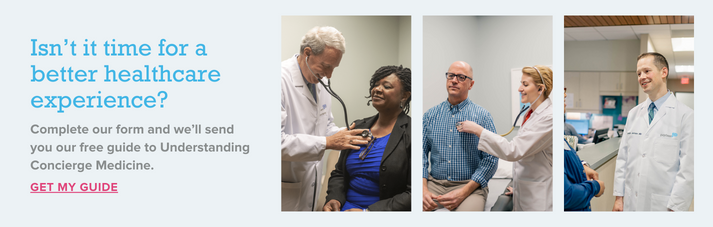
How does concierge medicine work? Download our Understanding Concierge Medicine guide to find out.

Cancer screening is changing. Newer tools like the Galleri multi-cancer early detection (MCED) test can look for signals associated with more than 50 types of cancer using a single blood sample.
But deciding whether to get an advanced test like Galleri involves more than understanding how the test works.
-
Does the test make sense for you?
-
How does it fit with the cancer screenings you already receive?
-
What happens if a cancer signal is detected?
-
And what does a negative result mean for your preventive care going forward?
Those are questions best considered with a physician who understands your health history and can help you make sense of the information before and after testing.
At PartnerMD, our physicians help patients evaluate advanced screening and risk-assessment tools, including Galleri MCED testing and polygenic risk score (PRS) testing, as part of a broader approach to preventive care.
We spoke with PartnerMD family medicine physician Dr. Matthew Paine about these emerging tests, what they can and can't tell you, and why having a physician involved can be an important part of the process.
“My goal isn't to sell you a test,” Dr. Paine said. “It's to help you understand what these tests can do, what they can't do, and how to decide together whether they're right for you.”
Before you consider Galleri, keep these points in mind:
- Concierge care gives you personalized guidance before choosing Galleri, based on your health history, risk factors, and preventive care.
- Galleri complements, rather than replaces, recommended cancer screenings and can be considered as part of your complete screening plan.
- More time with your physician can help you understand what your results do and don't mean.
- If additional testing is needed, your physician can help determine and coordinate next steps.
- Galleri can be part of a broader approach to advanced testing, guided by what may actually be useful for your health.
What does having a concierge physician involved add? Here are five benefits to consider.
1. You get personalized guidance before you test.
Galleri isn't a test that everyone automatically needs. Whether it makes sense for you depends on your personal and family health history, cancer risk factors, current screening plan, and overall health goals.
In a concierge medicine practice, your physician already has an established understanding of your health and has more time to discuss how a test like Galleri could fit into your preventive care. Together, you can weigh the potential benefits and limitations and determine whether the information it provides would be useful for you.
Rather than approaching Galleri as a standalone test, you can make the decision with personalized guidance from a physician who understands the bigger picture of your health.

2. Galleri can be integrated into your complete cancer screening plan.
Galleri may identify cancer signals associated with cancers that do not currently have routine screening options. But it isn't intended to replace established screenings such as mammograms and colonoscopies.
As Dr. Paine puts it, “Think of multi-cancer early detection (MCED) testing as an early signal, not a final answer.”
Your concierge physician can consider Galleri alongside the cancer screenings you're already receiving and help you understand the role each one plays based on your age, health history, and individual risk.
The goal is a more complete cancer screening plan in which newer tools like Galleri complement, rather than replace, the preventive care you already need.
3. You have more time to understand your Galleri test results.
With a test like Galleri, getting the result is only part of the process. Understanding what that result does and doesn't tell you is just as important.
A cancer signal detected result does not mean you have cancer. Likewise, a result showing no cancer signal detected does not guarantee that cancer isn't present. Galleri may miss some cancers, particularly at earlier stages, which is another reason recommended cancer screenings remain important.
In a concierge medicine practice, longer appointments give you more time with your physician to talk through those nuances, ask questions, and understand your result in the context of your overall health.
That additional time can be especially valuable when a result raises questions about your individual risk, other screenings, or what should happen next.
4. You have a physician to help coordinate what comes next.
If Galleri detects a potential cancer signal, the test itself cannot confirm whether cancer is present. Additional testing is needed to investigate the result, which could include imaging, diagnostic testing, or evaluation by a specialist.
This is another area where an established relationship with a concierge physician can make a difference. Your physician can help determine the appropriate next steps, order additional testing when needed, and coordinate referrals to specialists.
Dr. Paine emphasizes that patients should understand this possibility before they ever take the test. “If a test is positive, you need to be willing to pursue additional testing, such as imaging or specialist evaluation.”
Rather than being left with a result and questions about what to do next, you already have a physician who knows your health and can help guide you through the next stage of care.
5. Galleri can be part of a broader approach to advanced testing.
Galleri is just one of a growing number of advanced tests that can provide additional information about your current health or future risk. Depending on your individual needs, your physician may discuss options such as OpenDNA CardioRisk+ genetic risk testing, whole-body MRI, CT coronary artery calcium scoring, DEXA scans, or vascular screenings.
But having access to more testing doesn't necessarily mean you need more testing. The value comes from having a physician who can help determine which information may actually be useful for your care, then interpret those results alongside your medical history, other test results, and overall health goals.
As Dr. Paine puts it, “These tools represent exciting progress in medicine, but they work best with a trusted doctor-patient relationship.”
With that relationship at the center, advanced testing can become another tool for making more informed, personalized decisions about your long-term health.
/physical-therapist-prepares-to-work-with-patient.jpg_s=1024x1024%26w=is%26k=20%26c=5w6r--bmzMFnah5VgJ4Krt5UGU2_MlREUD1-1fdX7s8=%20(1).jpg?width=1024&height=512&name=physical-therapist-prepares-to-work-with-patient.jpg_s=1024x1024%26w=is%26k=20%26c=5w6r--bmzMFnah5VgJ4Krt5UGU2_MlREUD1-1fdX7s8=%20(1).jpg)
Frequently asked questions about Galleri testing
Is the Galleri test worth it?
Whether Galleri is worth considering depends on your personal and family health history, cancer risk factors, current screening plan, and overall health goals. A physician can help you weigh the potential benefits and limitations and determine whether the information Galleri provides may be useful for your care.
Does Galleri replace a mammogram or colonoscopy?
No. Galleri does not replace recommended cancer screenings, including mammograms and colonoscopies. It is designed to complement existing screening by looking for cancer signals associated with multiple types of cancer, including some that do not have routine screening options.
What happens if Galleri detects a cancer signal?
A cancer signal detected result does not mean you have cancer. Additional testing is needed to determine whether cancer is present. Your physician can help determine appropriate next steps, which may include imaging, diagnostic testing, or a referral to a specialist.
Can a concierge doctor help me decide whether to get Galleri?
Yes. A concierge physician can consider your health history, individual risk, existing cancer screenings, and overall preventive care when discussing whether Galleri may make sense for you. Longer appointments also provide more time to discuss the test's benefits, limitations, results, and potential next steps.
Why the care around your Galleri test matters.
Galleri and other advanced tests can provide information that wasn't available through traditional preventive care just a few years ago. But access to advanced testing is only part of the equation. The care surrounding the test matters, too.
At PartnerMD, Galleri testing is one part of a broader approach to preventive care, not an isolated service. Your physician can help determine how advanced testing fits into what they already know about your health, your existing screenings, and your long-term care.
And as advanced testing continues to evolve, your physician can help you determine which tools may add meaningful information to your care and how they fit into your broader approach to prevention.
Interested in what else a more personalized approach to primary care can offer? Download our Understanding Concierge Medicine ebook to learn how the model works, what it costs, and what to consider when deciding whether it's right for you.
Topics:
