

Updated: August 11th, 2026 | Published: September 24th, 2024
3 min. read
How does concierge medicine work? Download our Understanding Concierge Medicine guide to find out.

Moving to a new city is exciting, but between packing boxes, changing your address, and settling into a new routine, it's easy for healthcare to fall to the bottom of your to-do list.
Waiting until you need medical care can leave you scrambling to find a new doctor, transfer prescriptions, or continue your care without interruption. Planning ahead can help you settle into your new community with greater confidence.
For more than 20 years, PartnerMD has helped thousands of patients establish long-term primary care relationships.
Through those experiences, we've learned that a little planning before a move can prevent unnecessary stress and interruptions in care.
Here are a few lessons we've learned over the years:
- Preparing your healthcare before you move can help you avoid unnecessary stress and interruptions in care.
- Researching new doctors before you arrive can make the transition much smoother.
- Establishing a relationship with a primary care physician early helps you stay on top of preventive care and ongoing health needs.
- Understanding your primary care options can help you choose the approach that's right for you.
1. Prepare Your Healthcare Before You Move
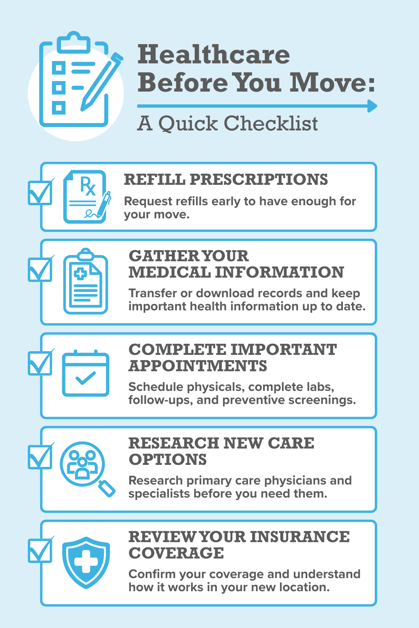
Before you start researching doctors in your new community, take a few steps to prepare with your current physician. A little planning now can help you avoid unnecessary delays and interruptions once you've moved.
Refill Prescriptions
If you take prescription medications, ask your doctor for refills before you relocate so you have enough to cover the transition. If you're moving to another state, ask whether your prescriptions can be transferred or if new ones will be needed.
Gather Your Medical Information
Talk with your doctor's office about transferring your medical records, or make sure you know how to access them through your patient portal. Keep recent test results, vaccination records, medication lists, allergies, and your insurance card readily available during the transition.
Complete Any Important Appointments
If you're due for a physical, lab work, specialist follow-up, or preventive screening, try to complete it before relocating. Taking care of these appointments now is one less thing to worry about after your move.
2. Understand Your Primary Care Options
As you settle into a new city, you're not just choosing a physician. You're also choosing the type of primary care experience that's right for you. The three most common primary care models are traditional primary care, direct primary care, and concierge medicine. Each offers a different approach to cost, access, and appointment experience.
Here's a quick comparison to help you understand the differences:
| Primary Care Model | How It Works | Appointment Experience |
|---|---|---|
| Traditional Primary Care | Typically covered through health insurance with appointments scheduled as needed. | Appointment length and availability vary by practice, with many physicians managing large patient panels. |
| Direct Primary Care | Patients pay a membership fee for primary care services rather than billing insurance for routine primary care. | Generally offers longer appointments and more direct access to your physician than traditional primary care. |
| Concierge Medicine | Members pay an annual fee for enhanced primary care and continue using health insurance for covered medical services. | Typically includes longer appointments, same- or next-day appointments, and more time with your physician to focus on prevention and long-term health. |
Moving is also a natural time to think about what you want from your healthcare. If your previous experience left you frustrated by rushed appointments, difficulty scheduling visits, or limited communication with your physician, relocating can be the perfect opportunity to explore a different approach to primary care.
3. Research Doctors in Your New Community
Once you know where you'll be living, it's time to begin researching primary care physicians in your new community. Doing a little research before you arrive can help you establish care sooner and make the transition much smoother.
Finding a primary care physician is one of the most important steps you can take after moving. Rather than choosing the closest office, take a little time to compare your options. A few good places to start include:
- Recommendations from friends, neighbors, coworkers, or your current physician.
- The WebMD Physician Directory to compare physicians, credentials, and patient reviews.
- Your health insurance provider's directory to find in-network physicians.
Once you've narrowed your list, make sure the practice is accepting new patients and consider factors like appointment availability, communication options, and whether the physician's approach aligns with your healthcare needs.
If you'd like more guidance, our article How to Find a New Doctor After You Move walks through what to look for and the questions to ask before making your decision.
Confirm Your Insurance Coverage
Before scheduling your first appointment, confirm that your new physician and any specialists you plan to see are in-network. If you're changing insurance plans, review your benefits and referral requirements to avoid unexpected costs.
Many people wait until they're sick to look for a doctor after they move. Unfortunately, that's often when they discover new patient appointments are booked weeks or even months in advance.
Once you've chosen a physician, don't wait to establish care. Scheduling an initial visit early helps ensure continuity of care, keeps you on track with preventive screenings and routine wellness, and gives your physician a better understanding of your health before an issue arises.
A New City Can Be a Fresh Start for Your Healthcare
Moving is more than a change of address. It's also an opportunity to establish a relationship with a primary care physician who better supports your long-term health.
By preparing before you move, finding a new doctor early, establishing primary care, and understanding your options, you can make the transition with confidence and avoid interruptions in care.
If you're interested in a more personalized primary care experience with longer appointments, greater access to your physician, and a stronger focus on prevention, download our Understanding Concierge Medicine guide to learn whether concierge medicine is right for you.
Topics:
